A sales dashboard can show which stores are underperforming.
It cannot always explain whether the problem comes from weak foot traffic, changing trade areas, new competition, or shifting customer behavior.
Location intelligence adds that missing geographic context.
It combines places, movement, customers, markets, and business performance to explain not only what is happening, but where it is happening and why location matters.
What Is Location Intelligence?
Location intelligence is the process of using geographic and location-based data to understand how place affects business outcomes.
A simple location intelligence definition is:
Location intelligence connects business data with geographic context to improve decisions.
It can combine:
- Places and POI data
- Mobility data
- Visit data
- Customer and audience data
- Demographics
- Traffic and accessibility data
- Market information
- Internal business data
For example, knowing where a store is located is location data.
Location intelligence goes further.
It can help answer:
- Where are customers coming from?
- Which trade areas generate the most demand?
- How does competitor proximity affect performance?
- Which markets are underserved?
- Where should the next store, branch, or billboard go?
- How does customer behavior change across locations?
Location data tells you where something is.
Location intelligence explains what that location means for a business decision.
What Is Location Analytics?
Location analytics is the process of analyzing geographic and location-based data to identify patterns, differences, and relationships.
In practice, location analytics and location intelligence are closely connected.
Location analytics focuses more on the analysis itself. Location intelligence focuses more on the business insight that comes from that analysis.
For example:
- Location analytics may show where customer visits are concentrated.
- Location intelligence may use that finding to recommend where to expand.
Location-based analytics can help teams study proximity, movement, trade areas, customer origins, market overlap, and demand.
How Location Intelligence Works
Most location intelligence solutions follow a similar process.
1. Collect Location and Business Data
The process starts with geographic information.
This may include coordinates, addresses, POIs, visits, roads, boundaries, movement patterns, and trade areas.
Businesses can then add internal data such as:
- Sales
- CRM records
- Store performance
- Customer data
- Campaign results
- Inventory
- Transactions
2. Standardize the Data
Location data often comes from different systems.
Addresses may need to be geocoded. Business categories may need to be normalized. Boundaries and timestamps may also need to be standardized.
This makes it easier to connect different datasets.
3. Add Real-World Context
External data adds more detail around the location.
This may include:
- Foot traffic
- Customer movement
- Nearby competitors
- Demographics
- Consumer characteristics
- Traffic
- Accessibility
- Market activity
- Surrounding businesses
These location-based insights help explain why one area performs differently from another.
4. Analyze Spatial Relationships
This is where location intelligence analytics becomes useful.
Businesses can study:
- Proximity
- Clusters
- Trade areas
- Visitor origins
- Travel patterns
- Market overlap
- Competitor density
- Changes in activity over time
These are common location intelligence techniques.
5. Apply the Insight
The final step is using the analysis in a business decision.
This may include:
- Choosing a new site
- Prioritizing a market
- Adjusting media spend
- Redesigning sales territories
- Improving local forecasts
- Identifying underperforming locations
What Data Powers Location Intelligence?
Different location intelligence use cases require different data.
| Data Type | What It Helps Explain |
|---|---|
| POI and Places data | Where stores, venues, and businesses exist |
| Mobility data | How people move between places |
| Visit data | When locations are visited and how often |
| People and demographic data | Who lives in or interacts with an area |
| Consumer data | Audience and behavioral context |
| Traffic and accessibility data | How easily people can reach a location |
| Business and market data | Competitive pressure and market opportunity |
| Internal business data | Sales, customers, operations, or campaign performance |
Location intelligence data becomes more useful when these layers are analyzed together.
A location may have high foot traffic but still be a weak expansion opportunity if the audience does not match the target customer or competition is too high.
Location Intelligence vs. Location Data vs. GIS
These terms are related, but they play different roles.
| Area | Location Data | GIS | Location Intelligence |
|---|---|---|---|
| Main purpose | Describe where something is | Store, map, and analyze spatial information | Turn geography into business insight |
| Common input | Coordinates, POIs, visits, boundaries | Multiple spatial datasets | Spatial, external, and business data |
| Typical output | Raw geographic records | Maps, layers, models | Decisions, priorities, forecasts |
| Example | Competitor coordinates | Map competitors and trade areas | Decide which market has the strongest opportunity |
Location intelligence GIS workflows often use GIS technology for mapping and spatial analysis.
But location intelligence is broader.
It connects geospatial and location intelligence with business goals, internal data, and decision-making.
Location Analytics and Business Intelligence
Location analytics and business intelligence answer different questions.
Business intelligence may show:
- Which stores generated the most revenue?
- Which market missed its target?
- Which campaign performed best?
Location business intelligence adds the spatial context.
It can answer:
- Why is one trade area outperforming another?
- Did a new competitor change customer movement?
- Which neighborhoods generate the most visits?
- Where should the business expand next?
Business intelligence explains what happened.
Location intelligence explains where it happened and how geography influenced the result.
Common Location Intelligence Applications
Site Selection and Market Expansion
Location analytics for location planning helps businesses compare markets and candidate sites.
Retailers, restaurants, banks, and other location-based businesses can study:
- Foot traffic
- Audience fit
- Trade areas
- Competition
- Accessibility
- Nearby businesses
- Customer movement
This provides a stronger view than population or fixed-radius analysis alone.
Retail Performance and Network Planning
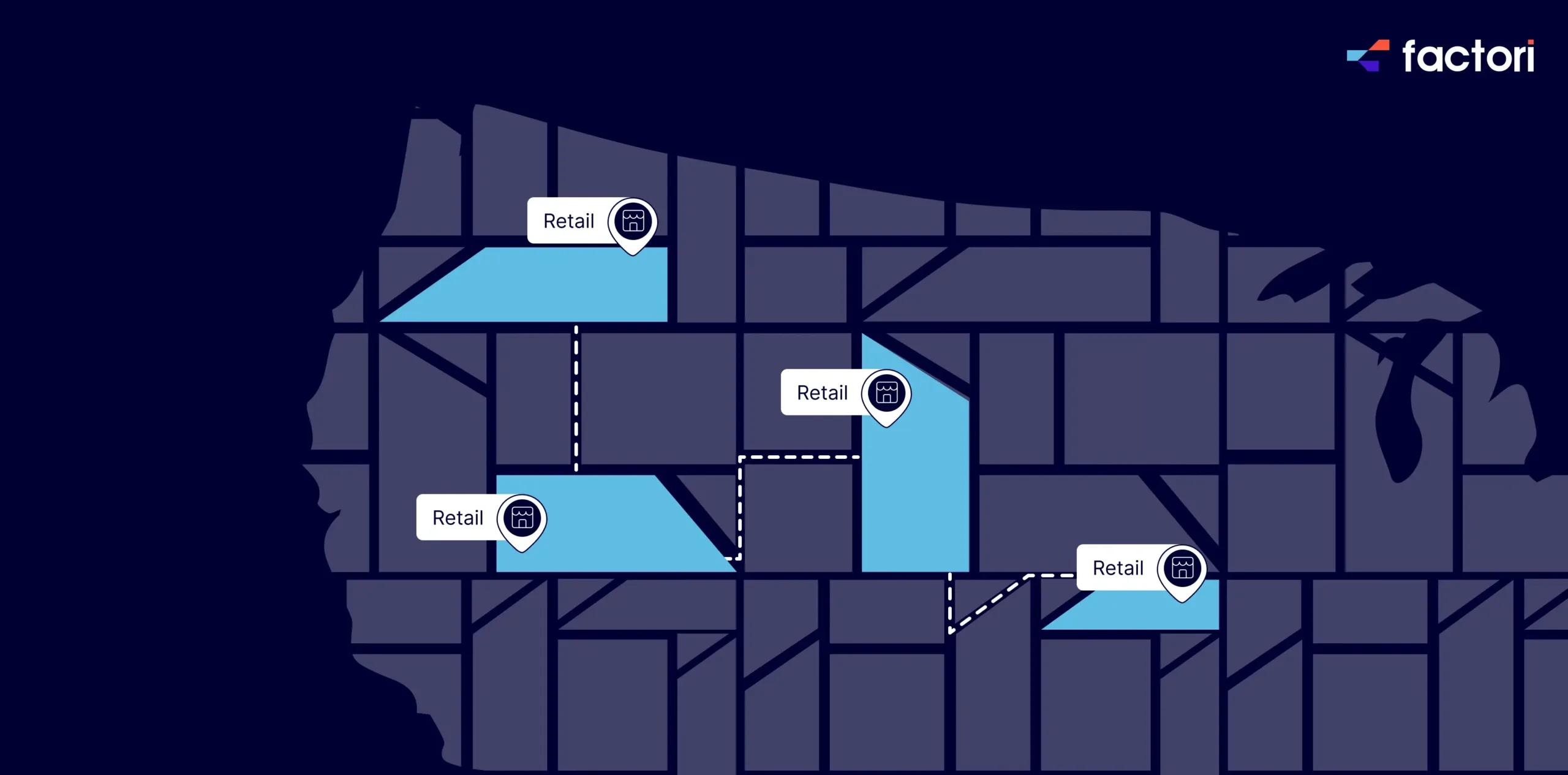
Retailers can use location intelligence to compare stores against local market conditions.
This can help identify:
- Underperforming trade areas
- Changes in customer movement
- Competitive pressure
- Catchment overlap
- Cannibalization risk
- Underserved markets
These insights support expansion, consolidation, and store-level strategy.
Audience Targeting and Media Planning
Location-based intelligence can help marketers understand where relevant audiences spend time.
This can support:
- Audience creation
- Geographic targeting
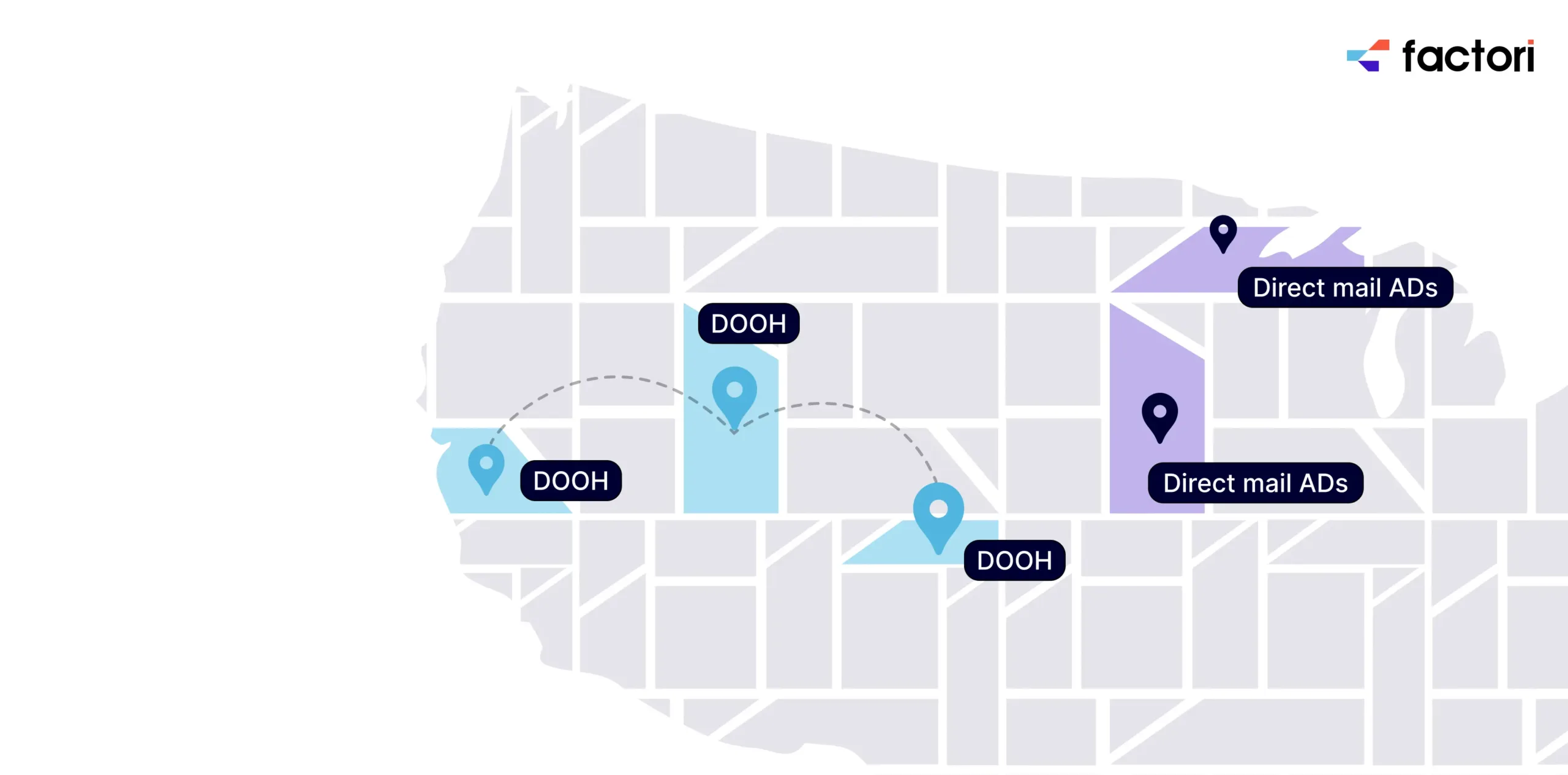
- DOOH planning
- Local media strategy
- Market prioritization
- Offline visit measurement
Location intelligence adds real-world behavior to digital audience data.
Demand Forecasting
Historical sales show past demand.
Location intelligence can add signals such as foot traffic, nearby businesses, market activity, and customer movement.
These inputs can improve forecasts for:
- Inventory
- Staffing
- Promotions
- Store-level demand
- Market expansion
Financial Services
Banks can use location intelligence for branch and ATM planning, market coverage, customer strategy, and geographic risk analysis.
For example, teams can identify areas where customer demand is strong but physical coverage is limited.
Commercial Real Estate
Real estate teams can use location-based analytics to compare properties using foot traffic, accessibility, audience fit, nearby businesses, and local demand.
This adds more context than property characteristics alone.
Territory and Market Planning
Sales, franchise, and field teams can use location analytics solutions to design territories based on market potential rather than simple administrative boundaries.
This helps allocate resources more effectively.
Location Intelligence Examples
A few examples make the concept easier to understand.
Retail
A retailer compares two potential store locations using foot traffic, customer origins, nearby competitors, and audience fit.
Banking
A bank studies ATM usage, local activity, and customer demand to decide where to relocate machines.
Media
A marketer identifies high-activity areas for DOOH placement and then measures changes in visits after the campaign.
Real Estate
A developer compares candidate properties using local foot traffic, surrounding POIs, accessibility, and market growth.
These location intelligence examples all use geography to improve a business decision.
What Are Location Intelligence Tools?
Location intelligence tools help teams collect, analyze, visualize, and apply location data.
Common location intelligence tools include:
- GIS software
- Mapping platforms
- Spatial databases
- Location APIs
- Mobility data platforms
- POI databases
- Trade area tools
- Location intelligence platforms
- Analytics and BI integrations
A location intelligence platform brings several of these functions together.
It may help users access data, run location analysis, compare markets, visualize results, and connect outputs with other business systems.
A location-based intelligence platform may also include APIs or bulk data access for more technical teams.
Location Intelligence Software vs. Services
Location intelligence software gives businesses the tools to perform analysis themselves.
Location intelligence services may include data delivery, APIs, geocoding, market analysis, trade area work, enrichment, or managed analytics.
Some businesses need a full location intelligence solution.
Others may only need data or APIs.
The right approach depends on the team, use case, and technical setup.
How to Evaluate a Location Intelligence Solution
Not every location intelligence tool or platform provides the same value.
Businesses should review:
- Data accuracy
- Geographic coverage
- Update frequency
- POI quality
- Mobility methodology
- Integration options
- GIS compatibility
- APIs and bulk access
- Privacy controls
- Ease of use
- Analytical depth
A good location intelligence company should also be clear about where its data comes from and how it is updated.
The best solution is not the one with the most features.
It is the one that supports the business decision clearly and reliably.
Artificial Intelligence and Location Intelligence
Artificial intelligence location intelligence workflows are becoming more common.
AI can help teams summarize location data, identify patterns, compare markets, and interact with geospatial information through natural language.
It can also support:
- Market scoring
- Site comparison
- Demand forecasting
- Anomaly detection
- Territory planning
- Predictive modeling
AI does not replace the need for accurate location data.
The quality of the output still depends on the quality, coverage, and freshness of the underlying data.
Benefits of Location Intelligence
The main benefit of location intelligence is that it adds real-world context to business data.
It can help businesses:
- Reduce uncertainty in expansion decisions
- Identify stronger markets
- Improve customer understanding
- Evaluate sites more accurately
- Detect competitive changes
- Improve media planning
- Strengthen demand forecasts
- Connect internal performance with market conditions
This turns geography into an analytical variable rather than just a map layer.
What Makes Location Intelligence Reliable?
More data does not automatically mean better analysis.
Businesses should evaluate:
- Accuracy: Are locations and attributes correct?
- Coverage: Does the data cover the required markets?
- Freshness: How often are changing signals updated?
- Consistency: Are categories and timestamps standardized?
- Relevance: Does the data answer the business question?
- Privacy: Are movement and audience insights handled responsibly?
- Integration: Can the data connect with GIS, BI, data warehouses, or AI workflows?
These factors matter most when the analysis supports major decisions such as network expansion or forecasting.
How Factori Supports Location Intelligence
Factori helps businesses combine real-world information about people, places, movement, and visits with existing analytics and decision workflows.
Mobility and Visit Intelligence help teams understand how people move and interact with physical locations.
POI data adds context about businesses, categories, competitors, and the surrounding market.
People and Consumer Data add audience and market context.
Factori provides access through its location intelligence platform, datasets, APIs, and MCP integrations.
These capabilities support:
- Site selection
- Market intelligence
- Retail optimization
- Media planning
- Audience targeting
- Demand forecasting
- Predictive analytics
Factori is designed to help teams move from raw location intelligence data to business decisions without building every data layer from scratch.
Conclusion
Location intelligence is more than putting business data on a map.
It connects geography with movement, customers, places, markets, and business performance.
Location analytics helps teams understand these patterns. Location intelligence turns them into decisions.
For businesses deciding where to expand, who to target, how to allocate resources, or where demand may change, location intelligence makes geography measurable.
FAQs
What Is Location Intelligence?
Location intelligence is the process of combining geographic data with business information to understand how location affects performance and decisions.
What Is Location Analytics?
Location analytics is the analysis of geographic and location-based data to identify patterns, relationships, and changes across places.
It is often used as part of a broader location intelligence process.
What Is the Difference Between Location Intelligence and GIS?
GIS is technology used to manage, map, and analyze spatial data.
Location intelligence uses spatial analysis, business data, and market context to support a decision.
What Are Common Location Intelligence Use Cases?
Common use cases include site selection, trade area analysis, market expansion, audience targeting, media planning, retail optimization, territory design, and demand forecasting.
What Should Businesses Look for in a Location Intelligence Platform?
Businesses should evaluate data accuracy, coverage, freshness, privacy, integration options, analytical capabilities, GIS compatibility, and whether the platform supports the intended use case.